
 833-294-8583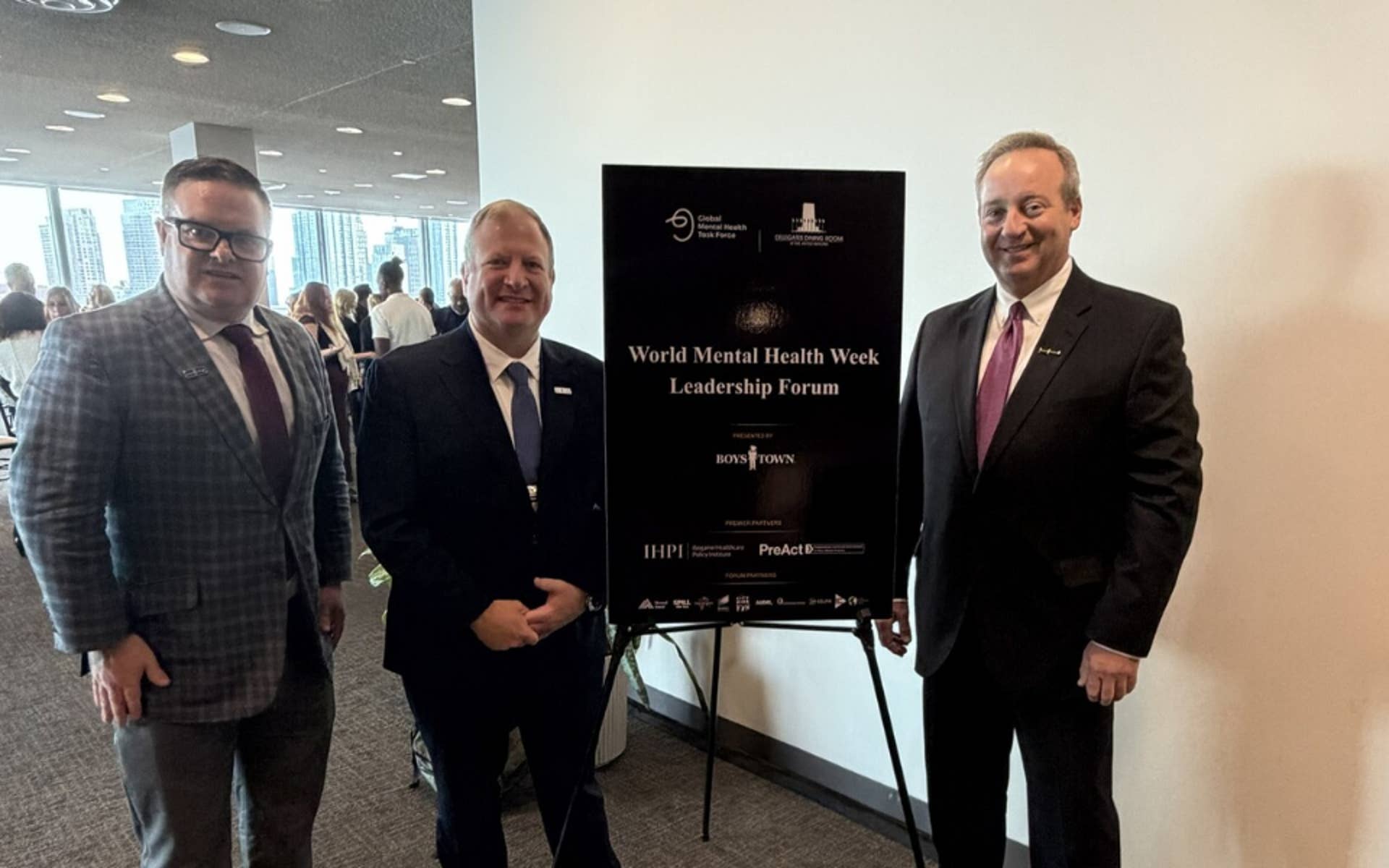
Boys Town executives returned to Omaha late last week after a visit to the United Nations headquarters in New York for the World Mental Health Week Leadership Summit.
Rod Kempkes, Boys Town’s CEO, kicked off the event with a presentation on mental health's future.
“We were fortunate enough to be invited to not only be on panels but give an opening address,” Kempkes told The World-Herald on Monday. “And there are people from around the globe that were there. They're all focused on mental health. Our sliver of that is mostly pediatric and adolescent mental health, but that was pretty powerful.”
The Global Mental Health Task Force presented the event on Thursday, which featured former U.S. Rep. Patrick J. Kennedy, among other speakers.
The task force was established in 2023 and is “focused on increasing access to mental health resources in support of” the United Nations’ good health and well-being sustainable development goal, according to its website.
Boys Town, the legacy Omaha-based nonprofit, provides a slew of services for children and families — from its national hotline to home family services and residential care, to Boys Town National Research Hospital.
Kempkes said he considers everything the organization does to be a mental health program.
“There's no separation between, you know, a youth that's struggling in their home and their mental health,” he said. “So a lot of these programs are based around how to make those kids feel like they have a future and they can thrive in it and they can deal with the issues. So, to me, the whole thing is around mental health.”
Dr. Jason Bruce, Boys Town’s chief operating officer, also spoke at the event. He said one aim is to think of health holistically instead of physical health and mental health being separate discussions.
“We want to thrive in life," he said. "We want our family to do well, and I think when people see the effects of mental health … it's not an individual illness; it's a family disease or problem, right? If you have one person in your family that's significantly struggling, it's stressors on everyone.”
Bruce said he believes “we’ll have made it when we don’t have to talk about it separately (from physical health). That we just talk about health and wellness, and what do we all need to really hit the peak of the mountain, so to say,” he said.
Kempkes added that an “investment in prevention will pay us massive dividends in crisis management.”
“You know, we deal with a lot of youth that come in and they're in crisis already, and the reason they're in crisis, we didn't have a lot of preventive measures with them in the first place, and so you had to have community supports,” he said.
Part of Kempkes’ opening address touched on the issue of mental health innovations having value when they become accessible.
“There's a lot of rural areas that do not have the type of access that we might have in metro areas of where we live,” he said. “So, when we talk about examples that we're working on, one of them is telehealth, telemental health. We also have a development for innovation for us, which is … we call it reality coach, but it's virtual AI learning environments for educators and employees and whatnot.”
He said Boys Town is focused on the education market at the moment “because we want to get to youth in preventative stages” so that the organization knows they stay in school.
Ryan McCreery, the vice president of research at Boys Town National Research Hospital, also spoke during the event.